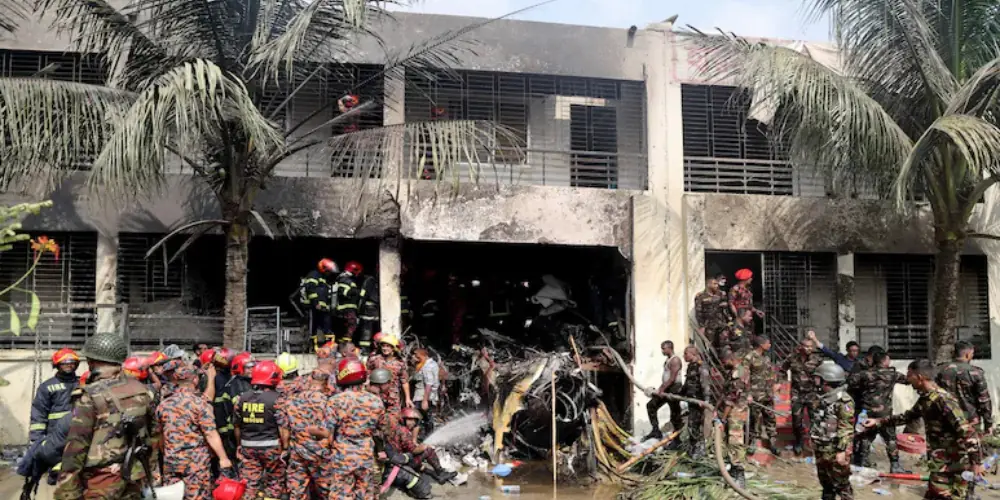
A government report has confirmed that pilot error caused the July crash of a fighter jet into a Dhaka school. The accident killed 36 people and injured over 170, making it one of Bangladesh’s deadliest aviation disasters in decades.
On July 21, students at the private Milestone School and College were leaving classes when a Chinese-made F-7 BJI fighter jet hit the building. The collision caused severe destruction, leaving many children and staff badly burned.
The committee submitted its findings to Chief Adviser Muhammad Yunus, who confirmed the cause. “There was an error in his take-off,” said Yunus’s press secretary, Shafiqul Alam.
What Led to the Crash
According to the military’s first account, the 27-year-old pilot had been carrying out a standard training mission when the jet suffered a mechanical malfunction. He tried to guide the plane toward an open area, but the aircraft went down on the school grounds.
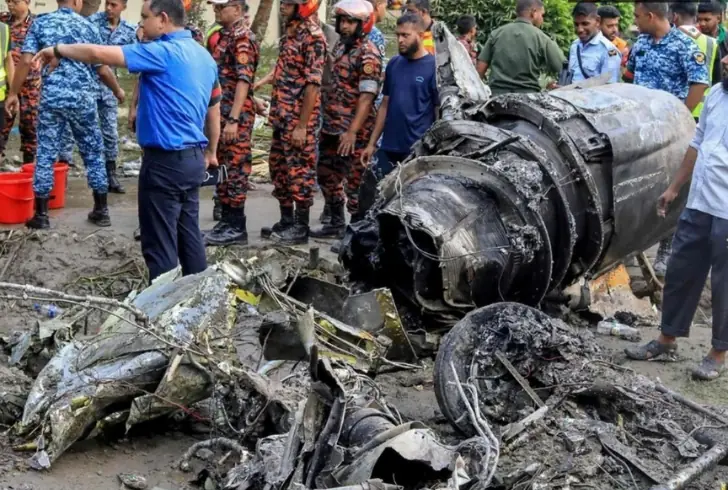
The disaster immediately triggered public outrage. Many residents demanded that the Bangladesh Air Force shift its training operations out of the capital. Until now, military officials had resisted, arguing that Dhaka held too much strategic value. The new report urges that training missions be moved to less populated areas.
Safety Recommendations
The committee pushed for tighter rules around airport zones to better protect civilians. It advised that key facilities—schools, hospitals, and small industrial sites—should not be built near flight paths.
It also encouraged a full overhaul of safety procedures to prevent similar incidents.
Public Response and Impact
The loss has shaken the community. Parents, educators, and local leaders continue to press for stronger aviation oversight and major reforms in military training protocols. The Civil Aviation Authority is facing growing pressure to respond.
The disaster highlights how vulnerable crowded cities are when military aircraft operate overhead. Policymakers must now balance defense needs with residents’ safety, with the tragedy serving as a powerful reminder of the need for urgent and ongoing safeguards.